
Which is the best energy supplier for solar panels?


Finding the best energy supplier for solar panels can save you over €500 a year. Here’s how to find the supplier that will help you get the most out of your solar panels in 2026 and 2027.
The best supplier changes every day
This is always a smart move
The best—and therefore cheapest—option for solar panels in your situation changes daily. That’s why it’s important to compare rates carefully at all times.
- A fixed-rate energy contract is often more cost-effective than a dynamic one
- Compare based on the total cost of your energy contract
- With the end of net metering in sight, signing a one-year contract is the smartest move
- Look for a high feed-in tariff if you frequently feed electricity back into the grid
Our energy comparison tool takes all costs and revenues into account, such as feed-in costs, feed-in rates, and the end of net metering starting in 2027. This way, you can see at a glance which supplier offers the lowest annual price for your situation.
The 5 cheapest energy suppliers for households with solar panels
In October 2026, these are the top 5 cheapest energy suppliers for households with solar panels.
| Supplier | kWh price | Reimbursement per kWh in 2027 | Cashback | Price per month |
|---|---|---|---|---|
| Budget Thuis | €0.31 | 2,49984 ct. | €300.00 | €353.34 |
| UnitedConsumers | €0.30 | 0,49959 ct. | €435.00 | €354.41 |
| Delta | €0.30 | 0,25005 ct. | €300.00 | €355.35 |
| Mega | €0.33 | 4,09704 ct. | €465.00 | €355.39 |
| Pure Energie | €0.33 | 0,25003 ct. | €430.00 | €359.43 |
Last updated: 3 October 2026.
Based on a 4-person household with 12 solar panels and an annual consumption of 4,700 kWh of electricity, 1,700 m³ of gas, and 3,360 kWh of net metering.
Keuze.nl previously conducted an independent price comparison of energy suppliers offering solar panels.
This study found that the following were most often the cheapest:
- Mega (50x)
- United Consumers (37 times)
- Vandebron (27 times)
The study shows that there isn’t a single energy supplier that consistently offers the best price with solar panels. The cheapest supplier depends on your usage, how much you feed back into the grid, and current rates. Therefore, always compare to see which supplier is currently the most cost-effective for your situation.
About this study:
For this study, we tracked 15 energy suppliers from October 2024 through April 2025. We examined the monthly price, including all costs, on a weekly basis, based on multiple consumption and feed-in scenarios.
4 tips: how to find the best energy supplier with solar panels
Keep these 4 things in mind if you want to find the cheapest supplier when you have solar panels.
Tip 1: Choose a fixed-rate energy plan
A fixed-rate energy contract is the most cost-effective option with solar panels, and it also offers the most price certainty.
Here’s why:
A major advantage of a fixed-rate energy contract is that it allows you to secure a welcome discount as a new customer. Especially with solar panels, a discount of up to €500 makes a significant difference in your annual bill.
Plus, you’ll know exactly what rates you’ll be paying for the entire contract period, giving you certainty about what your solar panels will cost and generate.
You have little to no access to these benefits with a variable-rate energy contract. Our data also shows that this type of contract is consistently more expensive than a fixed-rate contract.
A dynamic energy contract with solar panels isn’t necessarily more advantageous either:
- Net metering is less favorable (on an hourly basis)
- You feed electricity back at the lowest dynamic electricity price between 12:00 and 16:00 (often yielding €0 or less)
- The price advantage of feeding electricity back into the grid compared to fixed-rate contracts remains to be seen
It now appears that once net metering is phased out in 2027, a dynamic contract for your electricity could be a good option. That’s because in 2027, you’ll receive a payment of between 2 and 6 cents per kWh for the electricity you feed back into the grid. By comparison, with a fixed-rate contract, that average is 0.5 cents per kWh.
However, we are now also seeing fixed-rate contracts that offer nearly 4 cents per kWh for feed-in, narrowing the price gap. We expect more suppliers to adjust their feed-in rates in the coming months, so it won’t be clear until 2027 which option is most profitable.

Geert Wirken
Energy expert
Tip 2: Compare the total cost of your energy contract
When comparing energy contracts with solar panels, let the total annual price be the deciding factor and don’t get hung up on individual price components, such as feed-in tariffs, gas and electricity prices, and fixed costs.
Here’s why:
Ultimately, the annual price—based on all price components combined—determines which supplier is the most cost-effective for you with solar panels.
It happens often enough that suppliers with lower rates and low net feed-in costs aren’t actually the cheapest in the comparison tool. In those cases, a high welcome discount of a few hundred euros ends up being the deciding factor.
Our energy comparison tool takes all key factors into account to find the best energy supplier, such as:
- Electricity price
- Welcome discount
- Feed-in tariff
- Feed-in costs
- End of net metering starting in 2027
Tip 3: Choose a 1-year fixed-rate plan due to the end of net metering
It’s better to choose a 1-year fixed-rate plan now. That’s cheaper than a 3-year fixed-rate plan and smarter in light of the end of net metering. Starting in 2027, your situation will change, so you’ll want to be able to switch again without being locked into an overly expensive contract for too long.
Here’s why:
Starting January 1, 2027, the net metering scheme will end. This means:
- You will only receive a feed-in tariff for the electricity you feed back into the grid (at least 50% of the base electricity rate)
- You will no longer receive a refund for energy tax and 21% VAT on the electricity you feed back
- With many suppliers, you’ll receive less than 1 cent per kWh in net feed-in revenue
As a result, feeding electricity back into the grid will be worth much less than it is now, and you’ll pay more for your energy.
Since we expect feed-in costs to decrease for many suppliers starting in 2027, resulting in a slightly higher net compensation, it’s wise not to lock yourself into an energy contract with solar panels for too long right now. That way, starting next year, you can compare rates again—without net metering—and lock in the cheapest contract.
Our comparison tool already incorporates the new rates effective in 2027, so you can immediately see which supplier is the most cost-effective for your situation through 2027.
Tip 4: Choose a high feed-in tariff if you frequently feed electricity back into the grid
If you consistently generate more electricity than you consume, choose a supplier with a higher net feed-in tariff. This will help lower your energy bill.
See here who offers the highest feed-in tariff
Here’s why:
Even though we don’t recommend focusing solely on individual costs, if you consistently feed back more electricity than you consume, you should definitely look at the feed-in tariff per kWh. This is significantly higher with some suppliers, meaning you’ll have more left over from your fed-back electricity after offsetting the feed-in costs.
Especially in 2027, it’s worth checking whether a dynamic electricity contract becomes more attractive compared to a fixed-rate one if you feed a lot of power back into the grid.
If you always feed electricity back into the grid, don’t choose a supplier with a net negative feed-in tariff, where the feed-in costs exceed the feed-in revenue. In that case, you’ll end up paying out of pocket to feed electricity back into the grid, which is much less cost-effective if you feed back a significant amount of electricity.
Geert Wirken
Energy expert
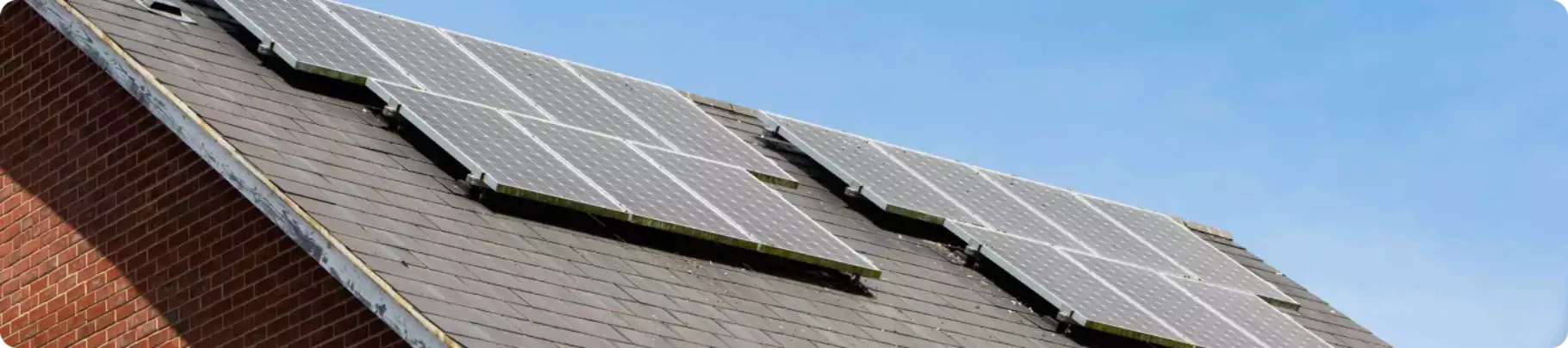
How to Compare Energy Plans with Solar Panels
Now that you know what to look for when comparing energy plans with solar panels, you can start using the comparison tool right away. You can find the cheapest option in 3 steps:
Step 1. Enter your details and energy usage.
Indicate your living situation and your estimated annual gas and electricity usage.
Step 2. Indicate how much electricity you feed back into the grid per year You
can find this on your annual bill or energy meter. This is less than your total generation, because you consume some of it yourself. Did you just install solar panels? Then ask the installer for an estimate of the feed-in.
Step 3. Choose the cheapest supplier.
This is the supplier with the lowest annual price. It is always listed at the top of the comparison tool.
Sources
- "Best Energy Suppliers 2025" survey by Keuze.nl
Topics
What did you think of this article?
Your feedback goes directly to our team and helps us provide you with better information.

Thank you for improving Keuze.nl!
We'll look into improving this.
We'll work on improving this article.